India's exports entered negative territory after a gap of about two years, declining sharply by 16.65 per cent to $29.78 billion in October, mainly due to global demand slowdown, even as trade deficit widened to $26.91 billion, according to data released by the commerce ministry on Tuesday. Key export sectors, including gems and jewellery, engineering, petroleum products, ready-made garments of all textiles, chemicals, pharma, marine products, and leather, recorded negative growth during October. Imports during the month under review rose by about 6 per cent to $56.69 billion on account of increase in the inbound shipments of crude oil and certain raw materials such as cotton, fertiliser and machinery.
The country's exports in December 2021 surged 38.91 per cent on an annual basis to $37.81 billion due to healthy performance by sectors such as engineering, textiles and chemicals, even as the trade deficit widened to $21.68 billion during the month, government data showed on Friday. Imports in December 2021 too increased 38.55 per cent to $59.48 billion. During April-December 2021-22, exports rose 49.66 per cent to $301.38 billion.

India and Bangladesh signed seven Memorandum of understanding (MoUs) on Tuesday in the presence of Prime Minister Narendra Modi and his Bangladeshi counterpart Sheikh Hasina in Delhi. India-Bangladesh delegation-level talks led by PM Modi and Hasina were commenced at the Hyderabad House in New Delhi. "India-Bangladesh delegation level talks led by PM @narendramodi & PM Sheikh Hasina commence. "On the agenda are issues related to connectivity, energy, water resources, trade & investment, border management & security, development partnership and regional & multilateral matters," the official spokesperson of the Ministry of External Affairs Arindam Bagchi tweeted.

The 68-year-old influential Arab leader will grace the Republic Day celebrations on January 26. Sisi is accompanied by a high-level delegation.

The government is likely to extend fiscal incentives for production of toys, bicycles and leather and footwear in the forthcoming budget as it looks to expand production linked incentive (PLI) scheme to cover more high-employment potential sectors, sources said. The government has already rolled out the scheme with an outlay of about Rs 2 lakh crore for as many as 14 sectors, including automobiles and auto components, white goods, pharma, textiles, food products, high efficiency solar PV modules, advance chemistry cell and speciality steel. The scheme aims to make domestic manufacturing globally competitive and create global champions in manufacturing, and it is yielding solid results, sources said.

The wholesale price-based inflation declined to a 21-month low of 5.85 per cent in November on easing prices of food, fuel and manufactured items. After remaining in double digits for 19 months, the wholesale price index (WPI) based inflation declined to 8.39 per cent in October. The inflation was 14.87 per cent in November 2021. "Decline in the rate of inflation in November 2022, is primarily contributed by fall in prices of food articles, basic metals, textiles, chemicals & chemical products and paper & paper products as compared to the corresponding month of the previous year," the commerce and industry ministry said on Wednesday.
India's production-linked incentive (PLI) scheme, which aims to make domestic manufacturing globally competitive, has attracted investment worth over Rs 45,000 crore and has also created three lakh jobs, NITI Aayog CEO Parameswaran Iyer said on Monday. The government has rolled out the scheme with an outlay of about Rs 2 lakh crore for as many as 14 sectors, including automobiles and auto components, white goods, pharma, textiles, food products, high efficiency solar PV modules, advanced chemistry cell and speciality steel. "The PLI programme has already started showing results.

Five days after the induction of 18 ministers into his cabinet, Maharashtra Chief Minister Eknath Shinde on Sunday allocated portfolios, keeping Urban Development and 11 other ministries with himself, while giving the crucial Home Department to Deputy CM Devendra Fadnavis.

Reliance Industries chairman Mukesh Ambani might have made news for purchasing the most expensive beach-side villa in Dubai recently, but he is not the only Indian eyeing the city for investment. Since Dubai allowed foreign investors full ownership in specific sectors in June 2021, a horde of Indian companies have moved or expanded into the desert city. The list even includes a kindergarten, an elementary and middle school, and a hotel that has sought 100 per cent ownership.
The growth in world trade is expected to slow down to one per cent in 2023, due to global uncertainties, according to a WTO forecast. The World Trade Organization (WTO) has also projected a growth of 3.5 per cent in global trade this year, as against the April estimate of 3 per cent. World trade is expected to lose momentum in the second half of 2022 and remain subdued in 2023, as multiple shocks weigh on the global economy, the multi-lateral body has said in a statement.

Modi said the government is committed to enhancing the income level of the handloom weavers apart from putting in place a robust social cover for the weavers' families.

The country's exports rose by about 6 per cent to a "record" $447 billion during 2022-23 on account of healthy growth in the outbound shipments of sectors such as petroleum, pharma and chemicals and marine, Commerce and Industry Minister Piyush Goyal said on Thursday. The country's imports also grew by 16.5 per cent to $714 billion in 2022-23 as against $613 billion in 2021-22. He said that the exports of goods and services together scaled "new heights" and has increased by 14 per cent to $770 billion in 2022-23 as against 676 billion in 2021-22.
We are looking at bringing quality control orders for mass production items such as smart meters and ceiling fans. This will benefit our own industry and consumers, a government official said.
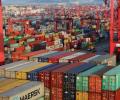
Exports in June rose by 23.52 per cent to $40.13 billion while the trade deficit ballooned to a record level of $26.18 billion mainly due to jump in gold and crude oil imports, the government data said on Thursday. The country's export growth in May was 20.55 per cent. Imports expanded by 57.55 per cent to $66.31 billion in June compared to the year-ago month, the data showed.

Broadly speaking, the expansion of the Council of Ministers sent out three major political signals.
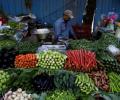
The wholesale price-based inflation eased to a 29-month low of 1.34 per cent in March on easing prices of manufactured products and fuel items, even though food articles turned expensive.

Government tenders could soon go to bidders who promise to train highest number of youth.

Hit hard by volatility in yarn prices, 50% of the looms said to be operating only 3-4 days a week.
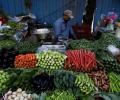
The wholesale price-based inflation bucked the 4-month rising trend in December 2021, and eased to 13.56 per cent, mainly on account of softening in fuel, power and manufacturing items even though food prices hardened. WPI inflation has remained in double digits for the ninth consecutive month beginning April. Inflation in November was 14.23 per cent, while in December 2020 it was 1.95 per cent.

Making the announcement, the Ministry of External Affairs said on Tuesday that India will hold the G20 presidency from December 1, 2022, and will convene the G20 leaders' summit in 2023 for the first time.

When Nitin Gadkari was president of the Bharatiya Janata Party, the party had announced it would set up a separate ministry for handlooms and handicraft. Instead of doing that, the BJP government has abolished the only institution that took into account the voice of the weavers.
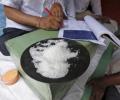
Pakistan will buy sugar and cotton from India, newly appointed Finance Minister Hammad Azhar announced on Wednesday, lifting a ban on their import from the neighbouring country imposed in the wake of heightened tension over Kashmir in 2019. The decision was taken at the meeting of the economic coordination committee (ECC), which was chaired by Finance Minister Azhar.

8 ministers in Modi Sarkar.2 are undergraduates.
Chinese government was expected to start sales from its cotton reserves on March 6.

It is for the first time in the history of Independent India that not a single Muslim is part of the Union Cabinet.

Scientists have applied their technical know-how and expertise in textile, coating and nanotechnology to develop the PPE having specific type of fabric with coating.

Fifteen Cabinet ministers and 28 Ministers of State were sworn-in by President Ram Nath Kovind at a ceremony at Rashtrapati Bhavan on Wednesday evening.

The product was banned for export earlier, but has now been moved to the restricted category, under which an exporter would have to seek a licence from the government for shipments.

The state governments and UT administrations should strictly enforce the test-track-treat protocol in all parts of the country, ensure observance of COVID-19-appropriate behaviour by everyone and, scale up the vaccination drive to cover all the target groups, the guidelines said.

Bangladeshi Prime Minister Sheikh Hasina arrived in New Delhi on Monday on a four-day visit to hold talks with his Indian counterpart Narendra Modi following which the two sides are likely to ink pacts in key areas, including defence, trade and river water sharing.

The Centre is pushing for bilateral trade with Cuba and its settlement in rupee as a part of its strategy to internationalise the domestic currency. A delegation from Cuba, including officials from its central bank, met Indian government officials and banks last month to discuss bilateral trade and settlement using the Reserve Bank of India's (RBI's) payment mechanism in rupee, said people aware of the matter. Since the Cuban nation has opened up its economy and is looking to implement reforms to attract investments from India, Cuban banks have evinced interest in opening special rupee vostro accounts (SRVAs) with Indian banks.

India's historical focus on its continental borders has overshadowed its maritime ambitions, but that is changing quickly, notes Ajai Shukla.
However, WPI inflation remained in double digit for the third consecutive month in July, mainly due to a low base of last year. WPI inflation was (-) 0.25 per cent, in July 2020. "The high rate of inflation in July 2021 is primarily due to low base effect and rise in prices of crude petroleum and natural gas; mineral oils; manufactured products like basic metals; food products; textiles; chemicals and chemical products etc as compared the corresponding month of the previous year," the commerce and industry ministry said in a statement.
Snapping the two-month easing trend, WPI inflation rose in August and remained in double-digit for the fifth consecutive month. In July 2021, WPI inflation stood at 11.16 per cent. In August 2020, WPI inflation was at 0.41 per cent. "The high rate of inflation in August 2021 is primarily due to rise in prices of non-food articles, mineral oils; crude petroleum and natural gas; manufactured products like basic metals; food products; textiles; chemicals and chemical products etc as compared the corresponding month of the previous year," the commerce and industry ministry said in a statement.

Particularly hit has been the apparel sector, where the time taken by the industry to adjust to the Goods and Services Tax regime, downward revision of export incentives, and a credit squeeze faced by small and medium scale enterprises, has pushed production downwards.

Even as Congress has announced plans to hold year-long celebrations to commemorate the 125th birth anniversary of BR Ambedkar, Prime Minister Narendra Modi is expected to lay the foundation stone for the 'Ambedkar International Centre' in New Delhi, the legacy of the Dalit icon becoming the focus of a contest between the rival parties

Ruia, a chartered accountant whose business ranged from sugar to textiles and heavy engineering to tyres, refused to comment on queries about his interest in Air India.

Nearly eight months after the government repealed the three controversial farm Acts, it has constituted a high-powered panel under the chairmanship of former agriculture secretary Sanjay Agarwal to make the minimum support price (MSP) mechanism more effective and transparent as promised by Prime Minister Narendra Modi in his televised address announcing the repeal. The names of three members from the Samyukta Kisan Morcha (SKM), the main grouping that spearheaded the year-long agitation at Delhi's borders, have been withheld, pending receipt by the government, stated a gazette notification. NITI Aayog member Ramesh Chand, Indian Institute of Management-Ahmedabad Professor Sukhpal Singh, Indian Farmers Fertiliser Cooperative chairman Dilip Sanghani, secretaries of the Departments of Agriculture, Indian Council of Agricultural Research, Food and Consumer Affairs, Cooperation and Textiles, along with representatives from the state governments of Karnataka, Andhra Pradesh, Sikkim, and Odisha will also form part of the panel.

'All regulatory agencies must be made Constitutional bodies like the Election Commission, the Supreme Court, and the CAG.' 'That way they will become independent of the minister,' recommends T C A Srinivasa-Raghavan.

Spurring the economy, currently in the throes of a slowdown, remains the prime focus for most ministries, but the government is also looking to make women's welfare and environmental protection key to policymaking in this term.
